
Ayurvedic Treatment for High Blood Pressure (BP): Causes, Symptoms & Natural Remedies

High blood pressure, also known as hypertension, is a serious health condition often called a “silent killer” because it develops without clear symptoms. If left untreated, it can damage the heart, kidneys, and blood vessels.
Fortunately, Ayurveda offers a holistic and highly effective approach to managing and naturally reversing this condition. By understanding the root causes, making targeted dietary shifts, and adopting a balancing daily routine (Dinacharya), you can protect your heart and naturally bring your blood pressure back to a healthy range.
Understanding High Blood Pressure: The Ayurvedic View
In Ayurveda, high blood pressure is not just a problem of the heart; it is a systemic issue linked to an imbalance of the Vata and Pitta doshas, immense stress on the mind, weak digestion, and blockage of the body’s channels (Srotas) due to Ama (digestive toxins).
When the mind is overactive (aggravated Vata) and digestion is poor, toxins build up. These toxins mix with the blood, causing the blood vessels to become tense, rigid, and narrowed, which naturally leads to increased blood pressure.
Benefits of the Ayurvedic Approach: Unlike temporary fixes, Ayurvedic treatment focuses on calming the nervous system, balancing the doshas, improving digestion, and supporting healthy circulation. This natural method not only stabilises BP but also improves overall vitality.
High Blood Pressure Causes And Symptoms
To effectively treat hypertension, it is vital to understand what triggers it and how your body reacts.
Causes (Nidana)
- Unhealthy Diet and Excess Salt: Eating high-salt snacks, packaged foods, pickles, fried items, and red meat increases fluid retention and raises pressure in the arteries.
- Stress and Emotional Pressure: Constant worry, anger, overthinking, and lack of adequate rest stimulate the nervous system. Over time, this tightens blood vessels and increases BP levels.
- Lack of Physical Activity: Sitting for long hours without exercise reduces heart efficiency, forcing the heart to pump harder than required to circulate blood.
- Obesity and Excess Belly Fat: Extra weight puts a massive strain on the heart and blood vessels, leading to higher pressure and an increased risk of hypertension at a much younger age.
Recognising the Symptoms (Lakshana)
- Headache and Heaviness: Many experience a throbbing pressure around the head, especially early in the morning, signalling that BP is higher than usual.
- Dizziness and Tiredness: Reduced or strained blood flow to the brain may cause light-headedness, generalised weakness, or abnormally low energy during routine daily activities.
- Shortness of Breath and Chest Discomfort: When BP rises suddenly, the heart has to work overtime, leading to breathlessness or tightness, which requires immediate medical attention.
- Blurred Vision or Eye Strain: High pressure can damage the delicate, tiny blood vessels in the eyes, causing temporary visual disturbances or discomfort.
- Irregular Heartbeat or Anxiety: Some individuals may feel a racing heartbeat, restlessness, or unexplained nervousness when their BP fluctuates.
Ayurvedic Lifestyle Tips for High BP
Making small but powerful adjustments to your lifestyle is the cornerstone of Ayurvedic healing. Here are proven practices to naturally manage high blood pressure:
- Head Massage with Coconut Oil: Gently massaging the scalp with cooling oils like coconut or Brahmi oil. Calms the aggravated Pitta and Vata doshas, significantly reducing mental stress and cooling the nervous system.
- Drink Warm Water Throughout the Day: Sipping lukewarm water rather than cold water. Keeps the blood clean, flushes out Ama (toxins), and prevents the stiffness of blood vessels.
- Practice Anulom-Vilom & Sheetali Pranayama: Alternate nostril breathing (Anulom-Vilom) and cooling breath (Sheetali). Naturally cools the body, oxygenates the blood, and stabilises erratic blood pressure instantly.
- Use Coriander and Fennel Water: Soak coriander (dhaniya) and fennel (saunf) seeds in water overnight and drink it in the morning. Acts as a natural diuretic, helping the body flush out excess heat and retained sodium.
- Sit in Vajrasana After Meals: Kneeling in the thunderbolt pose for 5-10 minutes after eating. Directs blood flow to the digestive organs, improving digestion and drastically reducing strain on the heart.
Daily Routine Tips to Prevent High Blood Pressure
Consistency is key in Ayurveda. Adopting these simple daily habits will keep your heart healthy:
- Morning Deep Breathing (5 minutes):
Example: Sit quietly facing the morning sun and take slow, deep breaths.
Benefit: Calms the nerves and prevents the dangerous early morning BP spikes.
- Daily 30-Minute Walk:
Example: A brisk walk in the park during early morning or late evening.
Benefit: Keeps arteries flexible, improves circulation, and manages weight.
- Reduce Screen Time at Night:
Example: Turn off phones and TVs at least an hour before sleep.
Benefit: Helps the body and mind relax, maintaining a steady heart rhythm and promoting deep, restorative sleep.
- Add 1 Fruit + 1 Salad Daily:
Example: Eat a bowl of cucumber and carrot salad before lunch, and an apple as a snack.
Benefit: Keeps digestion light, provides essential fibre, and heavily reduces sodium cravings.
Dietary Guidelines: What to Eat and What to Avoid
Food is considered medicine in Ayurveda. A helpful diet for hypertension includes light, warm, low-salt meals, an early dinner, and the strict avoidance of certain triggers.
Best Foods for High Blood Pressure
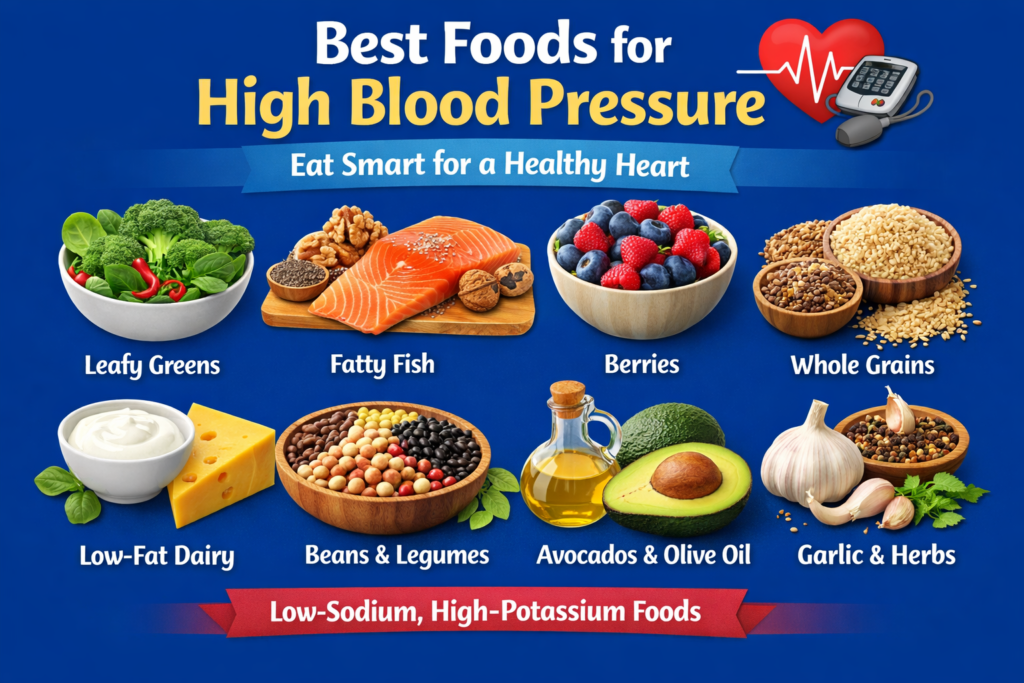
Adding these potassium-rich and cooling foods to your diet can work wonders:
- Beetroot (Juice or Boiled): Naturally relaxes blood vessels and supports smooth blood flow.
- Banana: Rich in potassium, it actively helps balance the excess sodium that increases BP.
- Oats / Daliya: Packed with slow-digesting fibre that keeps both cholesterol and BP under strict control.
- Spinach & Green Leafy Veggies: Provide vital magnesium, which naturally relaxes stiff arteries.
- Pomegranate: Improves artery flexibility, fights oxidative stress, and supports overall heart health.
Foods to Avoid in High Blood Pressure
To keep your blood channels clear, eliminate these from your daily intake:
- Pickles & Papad: Very high in salt; these can instantly raise your BP.
- Chips, Namkeen, and Packaged Snacks: Loaded with hidden sodium, unhealthy refined oils, and MSG.
- Excess Tea/Coffee: The high caffeine content raises the heart rate and triggers sudden BP spikes.
- Red Meat & Heavy Non-Veg Gravies: Extremely hard to digest (guru), increasing the pressure load on your cardiovascular system.
- Bakery Items (Cakes, Cookies, Puffs): Contain dangerous trans fats that stiffen arteries over time.
Seeking the Best Ayurvedic Treatment in Aligarh
While lifestyle and diet are foundational, chronic high blood pressure often requires expert medical guidance, precise herbal formulations, and personalised care. If you are struggling with hypertension, it is essential to consult an expert.
Finding the right ayurvedic clinic in Aligarh is crucial for proper diagnosis and holistic healing. When looking for effective High blood pressure treatment in Aligarh, an expert practitioner will assess your unique Prakriti (body constitution) and the exact dosha imbalance causing the issue.
Whether you are looking for reliable High BP ka ilaj aligarh or searching for the best ayurvedic doctor in Aligarh, the focus should always be on root-cause elimination rather than just symptom management. A dedicated High blood pressure problem doctor in Aligarh will prescribe specific ayurvedic medicine in Aligarh, such as Sarpagandha, Arjuna, or Ashwagandha, tailored to your condition.
By combining the right diet, lifestyle changes, and proper ayurvedic treatment in Aligarh, you can safely manage this condition. Comprehensive High BP treatment in Aligarh ensures that your heart remains strong and your mind stays calm.
If you are looking for effective Ayurvedic care in Aligarh, consult an experienced Vaidya practitioner can help manage high BP naturally.
Reviewed by: Vaidya Prateek Agrawal BAMS (Bachelor of Ayurvedic Medicine and Surgery) with 10+ years of experience in treating lifestyle disorders like hypertension.
Frequently Asked Questions (FAQs) About High Blood Pressure Treatment
1- Can Ayurveda cure high blood pressure completely?
While cure depends on how early the condition is caught and individual lifestyle factors, Ayurveda can effectively manage and often reverse high blood pressure by treating the root cause (dosha imbalance and toxins) rather than just suppressing symptoms.
2- Is it safe to stop my allopathic BP medicines once I start Ayurvedic treatment?
No, you should never stop your regular allopathic medicines abruptly. Ayurvedic treatments take time to heal the body from within. Your doctor or Vaidya will gradually taper off your allopathic dosage as your BP naturally stabilises.
3- Which Ayurvedic herb is best for high blood pressure?
Herbs like Arjuna (excellent for heart health), Sarpagandha (relaxes blood vessels), and Brahmi (reduces stress) are highly effective. However, they should only be taken after consulting an Ayurvedic doctor.
4- How can I lower my blood pressure instantly at home?
If you feel your BP is spiking due to stress, immediately sit down in a quiet place. Practice Sheetali Pranayama (cooling breath) or Anulom-Vilom for 5-10 minutes. Drinking a glass of warm water and massaging the soles of your feet can also provide quick relief.
5- Why are pickles and papad bad for high blood pressure?
Pickles and papad are heavily loaded with salt (sodium) for preservation. High sodium causes your body to hold onto excess water, which directly increases the volume of blood, putting immediate extra pressure on your blood vessel walls.