

Last month, a newly diagnosed patient visited Vaidyaji Aligarh with a common concern. “Doctor Sahib, does having diabetes mean I can never eat rice or chapati again?” This is one of the most common questions we hear. Many people believe a diabetes diagnosis means giving up all their favourite Indian foods. Fortunately, that’s not true. With the right food choices, balanced portions, and healthy lifestyle habits, most people can continue enjoying traditional meals while supporting healthy blood sugar management.
Diabetes is becoming increasingly common in India due to unhealthy eating habits, obesity, lack of physical activity, stress, and family history. Although medicines are important, diet remains one of the most effective ways to support blood sugar management. This guide shares practical diabetes diet tips, healthy Indian food choices, and simple lifestyle habits that can help you live a healthier life.
Why Diet Matters in Diabetes
When you eat, carbohydrates are broken down into glucose, which enters the bloodstream. In diabetes, the body either produces insufficient insulin or cannot use insulin effectively, causing blood glucose levels to rise.
A healthy diet helps slow glucose absorption, improves energy levels, supports heart health, and assists in maintaining a healthy body weight. Rather than avoiding all carbohydrates or sugar, focus on building balanced meals with vegetables, whole grains, lean proteins, and healthy fats.
Understanding a Diabetes-Friendly Diet
A diabetes friendly diet is based on balance, not restriction. It includes:
* Plenty of seasonal vegetables
* Whole grains
* Protein-rich foods
* Healthy fats
* Fibre-rich foods
* Adequate water intake
Fresh, home-cooked meals are generally healthier than packaged or highly processed foods because they contain less sugar, unhealthy fats, and sodium.
Top Diabetes Diet Tips
1. Never Skip Breakfast
Breakfast helps restore energy after an overnight fast and prevents overeating later in the day. A balanced breakfast should include protein, fibre, and complex carbohydrates.
Healthy options include:
* Vegetable oats
* Moong dal or besan chilla
* Vegetable poha with peanuts
* Idli with sambar
* Boiled eggs with whole wheat toast
* Homemade curd with seeds
Avoid sugary cereals, biscuits, and bakery products.
2. Fill Half Your Plate with Vegetables
Vegetables are rich in fibre, vitamins, minerals, and antioxidants while being naturally low in calories. They help improve digestion and keep you full for longer.
Choose vegetables like spinach, bottle gourd (lauki), bitter gourd (karela), cabbage, cauliflower, broccoli, cucumber, tomatoes, beans, capsicum, and ridge gourd (turai). Include vegetables in both lunch and dinner for better nutrition.
3. Choose Whole Grains
Refined grains such as white rice and refined flour are digested quickly and may increase blood sugar rapidly. Replace them with healthier alternatives such as:
* Whole wheat
* Brown rice
* Oats
* Barley (jau)
* Jowar
* Bajra
* Ragi
* Quinoa
These grains provide more fibre and nutrients while helping maintain steady blood glucose levels.
4. Include Protein in Every Meal
Protein supports muscle health, keeps you full for longer, and slows carbohydrate digestion.
Good protein sources include:
* Dal and lentils
* Rajma and chickpeas
* Black chana
* Soy products
* Paneer (in moderation)
* Homemade curd
* Eggs
* Fish
* Lean chicken
For a balanced meal, combine whole grains with protein and vegetables.
5. Practice Portion Control
Even healthy foods should be eaten in appropriate amounts. A simple plate method works well:
* Half the plate: vegetables
* One-fourth: whole grains (chapati or brown rice)
* One-fourth: protein-rich foods
Eat slowly, chew your food properly, and avoid distractions while eating. These habits help prevent overeating and support better blood sugar management.
Foods That Help Maintain Healthy Blood Sugar
No single food can cure diabetes, but a variety of nutritious foods can support healthy blood glucose levels.
Include foods such as oats, lentils, beans, leafy green vegetables, apples, guava, pears, flaxseeds, chia seeds, homemade curd, buttermilk without added sugar, and nuts like almonds and walnuts. Healthy oils such as mustard oil and olive oil can also be used in moderation.
Eating a variety of nutrient-rich foods throughout the week provides balanced nutrition and makes healthy eating easier to maintain.
A Sample Indian Diabetes Meal Plan
The following meal plan is an example of how balanced meals can fit into an everyday Indian routine.
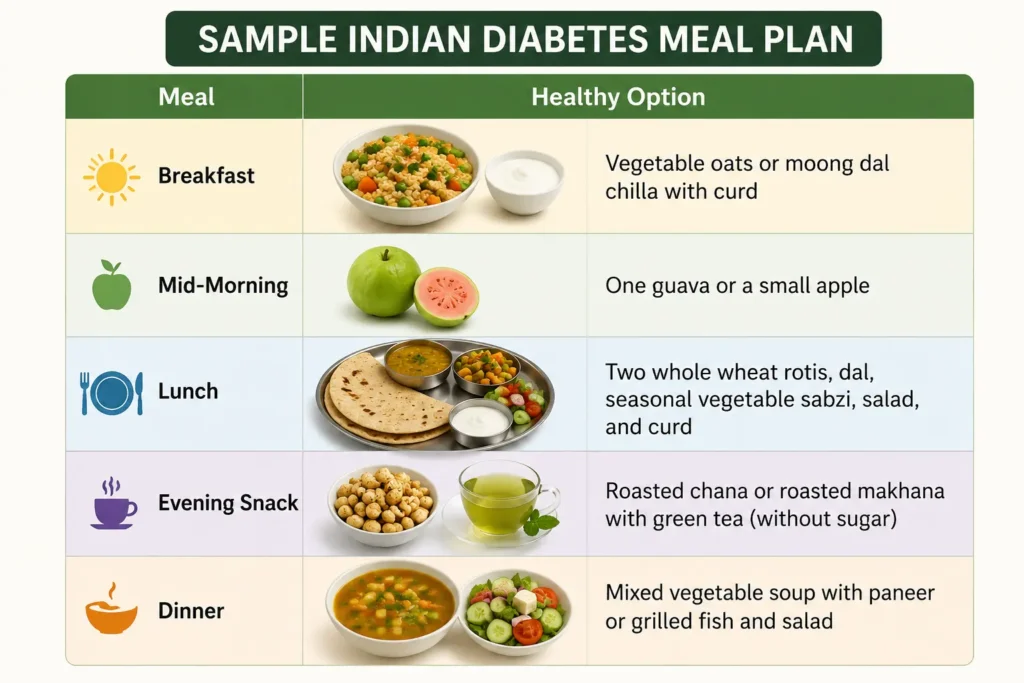
This is only a sample meal plan. Individual dietary needs vary depending on age, activity level, medications, and overall health. Consult a qualified healthcare professional for personalised advice.
Traditional Indian Foods Can Still Be Enjoyed
Being diagnosed with diabetes does not mean giving up traditional Indian meals. Many homemade foods can easily fit into a healthy diabetes diet.
Nutritious options include whole wheat chapati, millet rotis, dal, vegetable sabzi, vegetable khichdi, idli with sambar, sprouts, homemade curd, and vegetable upma. Instead of avoiding your favourite foods completely, focus on healthier cooking methods, less oil, and proper portion sizes.
An Ayurvedic Perspective on Healthy Eating
Ayurveda encourages eating fresh, seasonal, and home-cooked meals while maintaining regular meal timings and avoiding overeating. These simple habits support digestion and overall well-being.
For people with diabetes, Ayurveda also emphasises physical activity, adequate sleep, stress management, and mindful eating. Certain herbs are traditionally used to support metabolic health, but they should only be taken under the guidance of a qualified Ayurvedic practitioner.
Ayurvedic remedies are intended to complement modern medical care, not replace it. Never stop prescribed diabetes medication without consulting your doctor.
Lifestyle Habits That Support Diabetes Management
Healthy eating works best when combined with an active lifestyle. Small daily habits can make a significant difference in long-term diabetes management.
Some healthy lifestyle practices include:
* Engage in at least 30–45 minutes of physical activity on most days, such as brisk walking, cycling, yoga, or swimming.
* Sleep for 7–8 hours every night.
* Practice stress management through meditation, deep breathing, or relaxing hobbies.
* Drink enough water throughout the day.
* Monitor your blood glucose as recommended by your healthcare provider.
* Take medicines regularly and attend routine health check-ups.
Consistency is more important than perfection. Small improvements maintained over time often produce the best results.
When Should You Consult a Doctor?
Although a healthy diet plays a vital role in diabetes management, it cannot replace medical treatment.
Consult your healthcare provider if you experience:
* Persistently high or low blood glucose levels
* Frequent urination or excessive thirst
* Unexplained weight loss
* Constant tiredness
* Slow-healing wounds
* Tingling or numbness in the hands or feet
* Blurred vision
Early medical care can help prevent serious diabetes-related complications.
Conclusion
Managing diabetes is not about following a restrictive diet—it is about making healthier choices every day. Eating more vegetables, choosing whole grains, including protein with every meal, controlling portions, drinking enough water, and staying physically active can all support healthy blood sugar management.
Traditional Indian foods can still be enjoyed when prepared in a balanced way and eaten in appropriate portions. Along with regular medical care and a healthy lifestyle, these habits can improve overall health and quality of life.
If you’re looking for personalized Ayurvedic dietary guidance for diabetes, book a consultation with Vaidya Prateek Agrawal. After understanding your health condition, eating habits, and lifestyle, we can recommend a personalized wellness plan that complements your ongoing medical care.
Frequently Asked Questions (FAQs)
1. What is the best diet for diabetes?
A balanced diet that includes vegetables, whole grains, lean proteins, healthy fats, and fibre-rich foods while limiting sugary and processed foods is recommended for most people with diabetes.
2. Can people with diabetes eat rice?
Yes. Rice can be eaten in moderation. Choosing brown rice or eating smaller portions along with vegetables and protein is generally a healthier option.
3. Which fruits are suitable for diabetes?
Fruits such as apples, guava, pears, oranges, berries, kiwi, and papaya can be enjoyed in moderate portions as part of a balanced diet.
4. Can diabetes be managed through diet alone?
Healthy eating is essential, but many people also require medication, regular exercise, and ongoing medical supervision.
5. Is walking beneficial for people with diabetes?
Yes. Regular walking may improve insulin sensitivity, support weight management, and contribute to better overall health.
6. Can Ayurveda help with diabetes management?
Ayurveda promotes healthy eating and lifestyle practices that may support overall wellness. However, Ayurvedic medicines should only be used under the supervision of a qualified practitioner and should not replace prescribed medical treatment.
Disclaimer
This article is intended for educational and informational purposes only. It should not be considered a substitute for professional medical advice, diagnosis, or treatment. Always consult a qualified doctor or healthcare professional before making any significant changes to your diet, medication, or lifestyle.
*Reviewed by: Vaidya Prateek Agrawal